
.png)
March 5, 2026
Artificial Intelligence can feel intimidating, especially when it’s connected to something as personal as your identity. If you’re considering upgrading to an AI-powered biometric security system (like fingerprint or facial recognition access control), you may have heard concerns about “AI bias.” Let’s break this down in simple, practical terms.

AI bias happens when a system works better for some people than for others.
Imagine a facial recognition system trained mostly on photos of one age group or skin tone. When someone outside that group uses it, the system might struggle to recognize them accurately. That’s bias, not because the technology is malicious, but because it learned from incomplete data. AI systems learn from examples. If the examples are not diverse, the system’s performance won’t be balanced.
In a security context, bias could mean:
* Someone is falsely rejected when trying to access a building.
* A system struggles to recognize certain employees.
* Authentication takes longer for some users than others.
For businesses, this affects efficiency. For individuals, it affects trust.
When upgrading your security infrastructure, you are not just buying hardware — you are investing in a decision-making system powered by data.
The good news: preventing bias is a known issue, and responsible providers actively work to reduce it.
Here’s how:
**1. Diverse Training Data**
Modern biometric systems are trained using data that includes people of different ages, ethnicities, genders, and environmental conditions. The broader the dataset, the more reliable the system.
**2. Testing Across Groups**
Reputable providers test performance across demographics before deployment. If performance gaps appear, models are retrained and adjusted.
**3. Independent Audits & Regulation**
In regions like Europe, laws such as the EU AI Act require companies to assess and document risks in high-risk AI systems like biometric identification.
**4. Privacy-by-Design Systems**
Frameworks like the General Data Protection Regulation enforce strict data protection rules. Many modern systems now use on-device processing, meaning your biometric data does not sit in a large central database.
**5. Continuous Monitoring**
AI systems are not “install and forget.” They are monitored and updated on a regular basis to maintain security, accuracy and fairness over time.
Fear often comes from misunderstanding. AI is not a sentient decision-maker; it is a mathematical tool trained on data. Like any tool, its effectiveness depends on how responsibly it is built and managed.
When choosing a biometric security system, ask providers:
* How was your system trained?
* Do you test performance across different user groups?
* How is biometric data stored and protected?
* Do you comply with data protection regulations?
A trustworthy provider will answer clearly and transparently.
AI-powered biometrics are not about replacing human judgment, they are about strengthening security while maintaining convenience. Bias is a real challenge, but it is one that the industry actively works to minimize through better data, stronger testing, regulation, and ongoing oversight.
Upgrading your security system should make you feel safer, not uncertain. Understanding how AI bias is addressed allows you to make informed decisions rather than fearful ones. The future of security is intelligent. The key is ensuring it is also fair, transparent, and accountable.
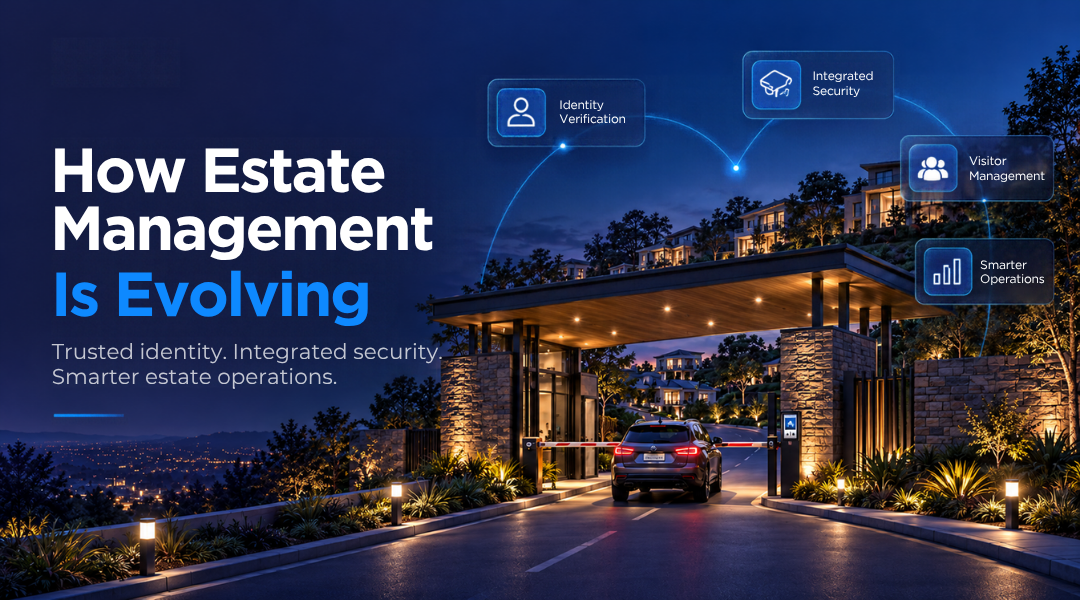
Estate management is evolving beyond traditional gates and access control towards a more integrated approach to security. Modern estates must manage trusted identities, biometric verification, visitor access and connected technologies while ensuring efficient daily operations. By integrating systems, estates can reduce administrative work, improve resident and visitor experiences, and respond to incidents more effectively. Future-ready estate security requires careful consideration of interoperability, cybersecurity, data management and long-term technology partnerships to create a secure, efficient and sustainable environment.
read more.png)
Biometric devices can look impressive while hiding weak algorithms, poor security and limited support. This article explains why international standards, independent testing, proven hardware and certified local repair matter. It also gives buyers a practical checklist to compare suppliers, reduce false matches, manage cyber risk and choose technology that performs when security is properly tested.
read more.png)
Ideco Biometrics CEO examines the widening AI oversight gap in enterprises and how fragmented identity systems fuel shadow AI risks and security breaches. With average breach costs reaching $4.44 million, continuous biometric identity assurance emerges as critical for securing AI adoption and building stronger organisational resilience across cloud and hybrid environments.
read more


