
.png)
July 15, 2026
If there’s one lesson security buyers cannot afford to ignore, it is this: a biometric device’s appearance says very little about how well it will perform when it is truly tested. Sleek hardware and impressive specifications may influence a purchasing decision, but real security depends on the standards, algorithms, resilience and support behind the device. In biometrics, what matters most is not how the technology looks, but whether it can be trusted when access, identity and evidence are on the line.

It's the day someone tries to fool it.
Or when a network outage occurs.
Or when a power surge hits.
Or during an audit when every access event suddenly matters.
That is the day you discover whether you invested in a biometric device that simply looked impressive, or one built on internationally recognised standards for accuracy, resilience and long-term reliability.
For organisations investing in access control, the most important question isn't:
"Does it look premium?"
It's:
"Can we trust it when it matters most?"
On the surface, two biometric readers can look almost identical.
Both may have a modern touchscreen.
Both may claim high accuracy.
Both may promise enterprise security.
The difference lies beneath the enclosure.
Biometric performance is determined by three critical layers:
The quality of the sensor determines how well fingerprints or facial images are captured in real-world environments. Resolution, liveness detection, environmental protection (IP ratings), impact resistance (IK ratings) and tamper protection all influence long-term reliability.
This is the mathematical intelligence behind the reader. It converts biometric characteristics into secure templates and determines whether someone is genuinely who they claim to be.
Even the best algorithm depends on how templates, thresholds, audit logs and integrations are managed across access control systems, identity platforms and security software.
A counterfeit or "rebranded" device may use an attractive enclosure while relying on an outdated algorithm, lower-quality sensor or unsupported firmware.
The result?
Higher false matches.
Greater security risk.
Reduced trust when it matters most.
Corporate Standard is the internal benchmark your organisation sets for security, risk, compliance and user experience.
It typically defines:
International Standard refers to globally recognised specifications that independently measure biometric performance.
Key examples include:
When a supplier like Ideco Biometrics in South Africa partners with an international technology leader such as IDEMIA, it combines internationally validated algorithms and hardware with local implementation, training, integration and long-term support.
In other words:
International standards provide the technology.
Corporate standards ensure it is deployed and maintained correctly.
One of the biggest risks in today's security market is assuming that similar-looking devices offer similar performance.
They don't.
Counterfeit or grey-market biometric devices often have one or more of the following characteristics:
If a manufacturer cannot demonstrate recognised testing through programmes such as NIST FRVT or ISO-aligned evaluations, there is no independent verification of claimed accuracy, false match performance or demographic fairness.
Many low-cost manufacturers have accumulated multiple publicly disclosed vulnerabilities, including remote code execution (RCE), buffer overflows and denial-of-service attacks listed within the National Vulnerability Database (NVD).
Without regular firmware updates and long-term vendor support, those vulnerabilities remain.
When a device fails, there may be no certified repair facility, no calibration process and no guaranteed firmware support.
Over time, sensor degradation, outdated firmware and unsupported hardware silently reduce system performance.
By comparison, internationally recognised platforms supported by an ISO-certified local repair centre provide:
Fraudsters and cyber-criminals are evolving rapidly.
Deepfake presentation attacks.
Synthetic identities.
Firmware exploits.
Sophisticated spoofing techniques.
No biometric system is immune.
The differentiator is how quickly you detect, contain and recover when something goes wrong, and that is a function of your chosen standard.
A corporate standard built on international standard technology ensures:
Before investing in your next biometric solution, ask your supplier these questions:
✔ Which international standards (ISO/IEC 19794, ISO/IEC 19795, NIST FRVT, FIPS 201) do your devices and algorithms comply with?
✔ Can you provide independently verified FPIR, FMR and demographic performance metrics?
✔ What is your local repair and calibration capability?
✔ How are firmware updates managed throughout the product lifecycle?
✔ What happens when the device eventually reaches End-of-Life?
If these questions cannot be answered confidently, your organisation may be accepting unnecessary operational and security risk.
The quality of a biometric system isn't measured on the day it's is installed.
It's measured on the day it's challenged.
Ideco Biometrics helps organisations build a corporate biometric standard founded on internationally recognised technology, local expertise and long-term lifecycle support.
From consultation and system design to deployment, certified repairs and ongoing maintenance, our objective is simple:
To ensure your biometric systems continue performing when it matters most.
If you're planning a biometric upgrade, or simply want to benchmark your current environment against international best practice, our team is ready to help.
Contact Ideco Biometrics for a no-obligation assessment of your current biometric environment and discover how internationally recognised technology, backed by local expertise, can strengthen your security posture for years to come.
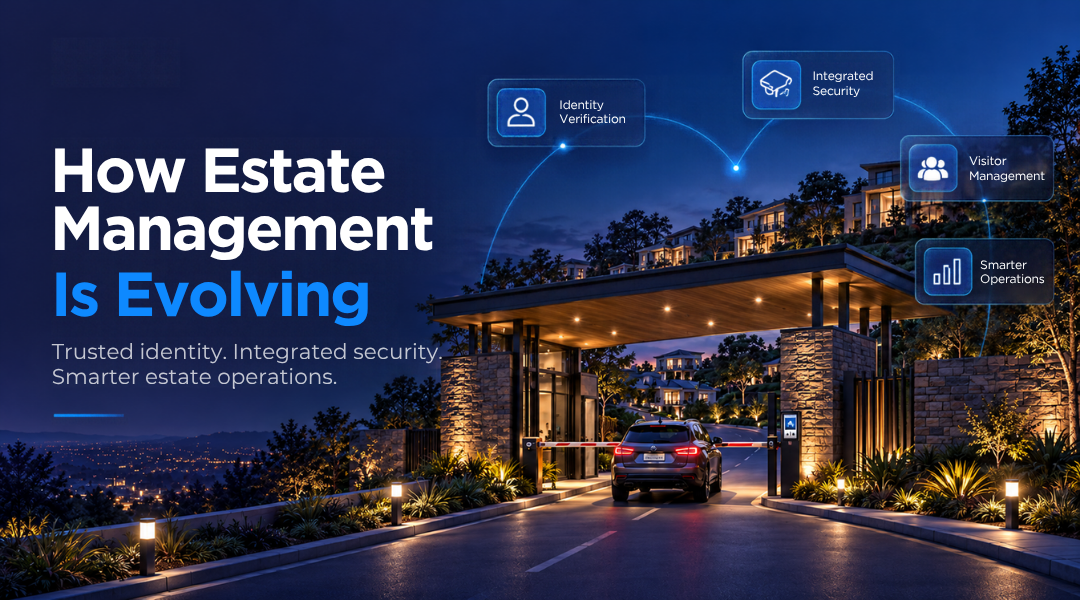
Estate management is evolving beyond traditional gates and access control towards a more integrated approach to security. Modern estates must manage trusted identities, biometric verification, visitor access and connected technologies while ensuring efficient daily operations. By integrating systems, estates can reduce administrative work, improve resident and visitor experiences, and respond to incidents more effectively. Future-ready estate security requires careful consideration of interoperability, cybersecurity, data management and long-term technology partnerships to create a secure, efficient and sustainable environment.
read more.png)
Biometric devices can look impressive while hiding weak algorithms, poor security and limited support. This article explains why international standards, independent testing, proven hardware and certified local repair matter. It also gives buyers a practical checklist to compare suppliers, reduce false matches, manage cyber risk and choose technology that performs when security is properly tested.
read more.png)
Ideco Biometrics CEO examines the widening AI oversight gap in enterprises and how fragmented identity systems fuel shadow AI risks and security breaches. With average breach costs reaching $4.44 million, continuous biometric identity assurance emerges as critical for securing AI adoption and building stronger organisational resilience across cloud and hybrid environments.
read more


